Showing posts with label collection. Show all posts

10/13/2026

Diederichs Märchen der Weltliteratur or Around the world in fairy tales

I have talked about our old library before, the one that was the American library after the war before it merged with the city's library not even that long before I started using it.
I had also mentioned that the building is an apartment building now. I wish I had pictures of the inside which are still so vivid in my mind, the door I still seem to feel pushing (and hear), heck, even the restroom that I never used because I was never brave enough to ask for the key (it was not in the library, but in the hallway right next to the entrance) which meant some visits had to be cut short.
In one post I wrote "The feeling of going in there and not only looking for new books, but also returning over and over again to the comfort reads of my childhood, drawn to certain shelves like a magnet still lingers in my memory."

And three years ago I commented on a blog "
When I was a child and teenager, our local library had a whole shelf full of these books and I loved the look of all the beautiful spines together. As I obviously had neither the space nor money to own them myself, I at least wanted to read each one of them and also read them to my little brother, but I don't think I ever made it all the way through. So many books to read, so little time."
Today I want to talk about that shelf that held the series called "Märchen der Weltliteratur" (Fairy Tales of World Literature) published by Diederichs (which the library still has, by the way).


The series was published from 1912 to 1940 in Jena and then again from 1952 in other cities, such as Düsseldorf.
It consists of 182 volumes, but if you don't count some of the revised editions, but only the different countries or topics, there are 165 of those.
I wonder if there's someone who has them all. They really would take up a lot of space, though.


I love the elaborate black and golden spines with the titles embossed in gold on different colors and always thought it was a pity you didn't see the beautiful cover patterns which were so typical for this series for so long without pulling the books out  (newer editions were paperbacks and the covers got modernized).
On the other hand, it was always such a surprise to pull one out randomly to see what it looked like. I'm so easy to please sometimes.


These 15 volumes were an eBay lot and I got them for less than €1 per book, postage included. I just couldn't resist, sentimental fool that I am.
But look at them, they are so pretty! They look as if they came fresh from a bookshop, they have their original plastic jackets, and even the ends of the ribbon bookmarks are still stuck inside the books. When I carefully opened some of them, they made that small "first time sound".
Do you know what I mean? That slightly creaking sound when the spine is moved and the solid edging - grey at the top in this case - "opened up" 
for the first time? 


Most of these are from the 70s, but the oldest one is from 1958.
Where have they been all this time? Are they really untouched and if so, why? Were they merely used for decoration? Or were they unloved gifts that the recipient didn't dare to give away?
It is an interesting mix - Japan, China, Vietnam, Korea, Tibet, India, for example, but there's also Kabylia (which I admit I had to look up, it's a region in Northern Algeria), Denmark, and one volume is completely in the Low German dialect!

One of the books I looked at had this flyer inside listing prices for the "lion books" (named after the publisher's logo) in 1974, a lot more than I paid for them, I can tell you.

I pulled out the ribbon of the book in the back.

Will I read them all? Well, from cover to cover ... I don't know. There are a few hundred fairy tales in these volumes. But who knows, maybe I could do one every night before I go to sleep, and maybe I'll tell you about them every, now and then?

Old relief with the Diederichs
logo, picture by Andreas
Praefcke, CC BY 3.0
via Wikimedia Commons

6/27/2026

Random Saturday - Postcards

Do you remember this post about a postcard which came back to the house where it came from? After almost 50 years?


Now you may think that is just another example of nostalgia, and part of it probably is, but to me it actually means learning more about our hometown and its history. Sometimes it takes a while to find info online, sometimes there's nothing to find.

And the backs of the cards - as in the above mentioned case - can be really interesting as well, but that may be a story for another time.

The other day, it came to me that I knew absolutely nothing about the history of the postcard itself. Another rabbit hole? Actually more of a whole burrow. There are so many pages out there, and while they agree on some things, they don't on others - doesn't that sound familiar ... Who was the first one to invent the "real" postcard? Which country was the first? What even is a "real" postcard? There are postcards and picture postcards. To be honest, my brain was overwhelmed trying to make sense of it all and especially to put it in a post shorter than a thesis and I failed miserably.
So let's just say that it really seems to have started in the 19th century (staying on the safe side here) and that most sources seem to agree on these Austrian "correspondence cards" to be the first "real" postcards even though there had been cards before.
Here's the history on the "World Postcard Day" page.

Correspondence card from 1869
Public domain via Wikipedia

When Heinrich von Stephan who reorganized the German postal service suggested something similar in 1865, the "open post sheet" which was meant to avoid an envelope by having pre-printed postage if you just wanted to send a short message, the idea wasn't well received.
What if servants read their employers' mail, for example? What about preserving public morals? Human sacrifice, dogs and cats living together, mass hysteria! Sorry, that's a quote from "Ghostbusters".
Anyhow, after the Austrian card was such a huge success, postcards caught on in other countries as well, even in Germany. I couldn't find any information on the servant-employer crisis related to that 
😉
Towards the end of the century, there were more and more picture postcards. Pictures could be lithographies, sometimes colorized, or photos. They showed individual buildings, streets, parks, but also persons.
For example, monarchy used postcards for propaganda, showing off their families as role models for their subjects and to shape a positive image of themselves - which may have worked for some people, but not others. Examples that come to mind are the Romanovs, Queen Victoria, Emperor Wilhelm II.

Early cards still looked different. 
Unlike the cards you probably know, one side was meant only for the address and the message was written above, below or around the picture, like in this panorama of Göppingen from 1903 made up of three postcards.
If it was just one card, the sender didn't manage to put much text on it.


Maybe that's why postcards changed later. The images took up one side completely and the back was divided in a space for the address and one for the message.
The address on this card from 1919 simply says "Umbrella shop" and the town.
Isn't the penmanship beautiful? As much as I like to look at writings in Sütterlin, it's not always easy for us today to decipher it, though.


I'm often surprised at what the senders have shared on postcards. Sometimes it's just a greeting from a short trip, a visit, a longer vacation, on occasion of a holiday, a thank you, but we have seen more than one that has been sent from a hospital and the news haven't always been very good.

Greetings for New Year's Eve. You might think the word and flowers are
drawn by hand, but they are printed on, probably after a hand drawn design.

I'm not very interested in cars in general, but look at these beauties!
I just love an nice old VW Bug. That restaurant is outside town, near an artificial lake. You just don't see VW Bugs there anymore now.
The other card shows our renaissance castle. If you look closely, you don't just see the old cars, but also - unfortunately blurry - a horse carriage in the background.


The following pictures are not postcards, but file copies which served as masters. They are actually just half the size of a card.
They were taken by a local photographer. Many of my cards were manufactured by local photographers, bookstores or stationery shops.


This is the square in front of the old train station with the post office on the right.


More old cars, but to me it was interesting to learn about the so-called "Kraftpost" (literally power post). These successors of stagecoaches were postbuses used in Germany (other countries had them as well) both for mail delivery and passenger transport. You can see a sign on the post office building. It's illegible here, but I also know a picture with a later sign that could be read easily.

Let's stop here or I might never stop again.
I hope I didn't bore you too much, but maybe you could get a
idea of how postcards have illustrated history over years, no matter if you are just interested in that of your town or area or global history.
When was the last time you sent a card?

7/22/2025

Nostalgia - My Stacey

It's not the first time I have told part of this story which began on Christmas, but within another post and with a terrible picture.
This story led to my collection many years later, so I think it's worth telling it right.

Christmas Eve 1970 - you know we give gifts on the 24th here - an excited little girl waiting for the living room door to open.
A brand new doll's pram awaited me and hand sewn clothes for my chubby doll.


Little Cat was an ingrate, though, I'm afraid to say. Her older sisters got Mattel dolls, and since little Cat has always been a sucker for miniatures (which hasn't changed to this day), she was fascinated. The small shoes, the tiny buttons and zippers ... Cat started nagging like only a five year old can. She annoyed her sisters wanting to look at their dolls.
And when she had nagged long enough and had probably driven everyone nuts, she was finally promised that she would get her own Mattel doll as soon as the stores were open again - on the 27th.
That can't have been fun for my family. I can't really remember, but I'm sure all I could think of was when it would be the 27th at last, and I probably wanted to go first thing in the morning.

When I was able to 
really reflect this years later, I felt kind of bad about it.
Yes, only kind of because I'm still really happy I got my doll, but 1. we didn't exactly swim in money and 2. my mother must have been so very disappointed at my reaction after sewing those doll clothes herself. How could she not have thought what a rotten little brat I was? I would have in her place.

Nevertheless, she took me to the store on the 27th and I got my first Mattel doll.
I have a very vague recollection of the floor of the toy store we went to - the "Fässler" - (name changed after my sister's memories 
😉), but I wouldn't be able to tell you if I picked the doll and the two outfits myself or if my mother did. I couldn't even say if my sisters were with us and gave their expert advice on the matter (there will be another post eventually on how to become an expert at the time).
Anyhow, my doll was - I should say is because she's still part of my collection of course - a Stacey with platinum blond hair.
My sister also had a Stacey, but with red hair, and I hope she'll forgive me for telling you that she poked me by saying that my Stacey was old because she had grey hair. Siblings, huh?
I loved my Stacey and I played with her. This poor girl had to go through a lot. A five year old doesn't have the dexterity to dress and undress her fashion doll without irreversible damage. I guess that's why I had got a pram.

Stacey's head turned yellow over the years and she has a sweaty face. That's not my fault, it's something that happened to a lot of vinyl dolls from that time. I could try to have her restored (or try it myself), for example with new skin paint, but I figure that she just aged together with me.
She was the first one in my collection - which I didn't know I would have -, she was bought as a toy, not a collector's item, and amazingly, she survived. It feels wrong to think about changing her, almost as if I had plastic surgery (and I don't "paint" my skin, either).

Oh the stories this poor little lady could tell ...

Her sickly face color is not her only problem. Even washed her hair has never been like new again.
As someone *whistling innocently* made her walk to the library (which I had set up in an armchair, completely with handmade call number tags) a lot by banging her feet on the ground a little too hard, she eventually lost half a foot.
Many years ago, my sister (the other one who got an (ash blond) Summer Sand TNT Barbie that Christmas) sewed an evening dress for her, but she can't wear heels with that because of her foot. Instead she's wearing a pair of vintage white lace-up boots.
 
She's also missing a finger, it broke off from putting bracelets on her wrist too often.
Do you remember that the two parts on ballpoint pens didn't necessarily screw together directly in the olden days? Often there was a little metal ring in between, in silver or gold. There were really thin ones and the wider ones. The thin ones were easy to put over her hand because you could bend them easily and then you would just bend them back on her wrist.
It was not that easy with the wider ones and bending Stacey's pinky often enough led to it breaking off eventually.

Another very typical problem for dolls that were played with are neck splits. Imagine a little girl constantly ripping the head off to put clothes or handmade necklaces on her doll (now I know how to make small necklaces with hooks) and pushing it back on the neck, it's a miracle the splits aren't worse. You can glue those neck splits, but you know my fragile relationship with glue.

Stacey was a so-called TNT doll - Twist'n'Turn - meaning she could not only turn her head from sideways, but also her waist. She also had bendable legs.
Stacey was introduced in 1968 as Barbie's British friend,  part of the "British Invasion". She brought the spirit of Mary Quant and London's Carnaby Street with her - a true "mod" doll.
She came in two versions, both manufactured only until 1971 which is a real pity.
There was the Talking Stacey who spoke in a British accent and came with a side ponytail and bangs in platinum blond and red (also called "Copper Penny").
The TNT dolls also had blond or red hair. The 1968 TNT had a side part and little curls at the forehead and sides, her ponytail was in the back.

A beautiful 1968 platinum TNT Stacey - no yellow face! - with open hair wearing
the "Suburban Shopper" dress (#969, 1959 - 1964) without accessories 
and with blue closed toe heels instead of white open toe heels.

The 1969 to 1971 TNT had short hair with a side part and flipped up ends, but if they are played with and have been combed, and depending on the amount of hair (which wasn't always the same), that could turn into quite the hairstyle.

"Copper penny" Stacey - also with a yellow, but not a sweaty face - wearing
"Sleeping Pretty" (#1636, 1965) without the accessories, one open toe heel is
missing its pompom which is not unusual, but a pity
.

All of them smile showing their teeth, they have rooted eyelashes and blush on their cheeks.
They are popular with collectors not only for their beauty, but also because they weren't on the market very long.

There were two Sears Exclusive gift sets for Stacey, "Stripes Are Happening" (#1545, 1968) and "Stacey Nite Lightning (#1591, 1969). These are the only outfits with a "Stacey" tag inside. Sears Exclusives are beautiful, but were unfortunately not on option for little German girls.
Stacey also appeared on several cases, either alone or together with Barbie, and once with Barbie and Francie.


Sources:

1. Sibyl DeWein and Joan Ashabraner: The Collector's Encyclopedia of Barbie Dolls and Collectibles. Paducah, KY, Collector Books, 1994
2. Sarah Sink Eames: Barbie Doll Fashion, Vol. I, 1959 - 1967. Paducah, KY, Collector Books, 1994
3. Vintage Stacey Dolls 1968 - 1971. On: Fashion Doll Guide


Stacey/Barbie/Francie is a registered trademark of Mattel, Inc. I am not affiliated with Mattel in any way.

P.S. If you worry about my baby doll, there's no need to. She was taken for walks outside in her new pram and she wore her new clothes, too. When she finally broke (she kept losing her limbs because the plastic wore out), my teddy bear, who has about the same size, inherited her more unisex kind of clothing.
Ok, so that's no reason for behaving like a spoilt brat, but I apologized for it often enough over the years 
😂

5/20/2025

Nostalgia - Princess / Prinzess Victoria needles

Some years ago when I still did the "Finds of the week" posts, I had some called "I'm a collector" in which I shared vintage items. Over time my collections have mostly stopped growing due to different reasons, but they are still there and still loved. I also have vintage items, some inherited, some gifts, some from fleamarkets, some more interesting than others. So I thought it could be fun to share some of them every, now and then and tell their story.

As this is a collection that's still growing, I have decide to give it its own page on the blog now, so I can update it more easily now.
You can find it here.


Actually, I already started talking about today's small collection a few years ago as part of a homage to needles, I just didn't know then this would turn into a collection of its own.
I have used and broken quite a few needles since I started beading. Bead embroidery, especially on the beaded sneakers (no idea why Blogger insisted to have extra space between the lines in that post) and the HeatherCat sneakers (this is the last post of four which has all the links if you are interested), was extra hard for them (well, and my hands).

In the homage post, I talked about how I discovered vintage paper needle packs while looking for beading needles and how I fell in love with some of the labels.
Most intriguing to me were the Princess Victoria needles because there were variations, and I thought they deserved a post of their own by now because there will probably be one or the other addition to them.
That means I will then update this post instead of the other one which might get a bit too long otherwise.
In fact, this one is also quite long already.

It's nice that the packs don't take up much space, though, and of course I can always use the needles if I need them as most packs are full, this isn't just decoration (or so I tell myself). The packs are scattered throughout my Steiff collection, rather fitting I think as most of it are sewn animals.

So what are Princess Victoria needles? I honestly wish I knew how they got that name.
When I got the first tiny pack - not even an inch - of size 12 sharps, I started searching, but without any success.
What I do know is that there are all sizes, that the packs can have a red or a golden edge and "banner" around Victoria, and that there are different pictures of Victoria. Some have a more vintage look, some look quite modern, some have a blurry or messy print, some a very clear modern looking one.

Some labels are all English, some are all German (saying Prinzess instead of Princess and using the German terms for the needles, such as Frauennadeln), some are a mix of English and German using the word "Prinzess" and "feinste", but the term "sharps", for example.
I even found a picture on eBay UK with an Italian label (and now wish I had bought that pack)!

There are those without a country of origin, but also some that specify it, "Germany", "Made in Germany", "M.i W. Germany, Imp. Allemagne OCC" (between 1949 and 1989), but also "Made in Czechoslovakia" (which means between 1918 and 1992) or "Made in the Czech Republic" (after 1992).
Last but not least, most of them that I have seen don't have a company name printed on, but there are exceptions. So far I have seen "Prym", "Rhein Nadel", and a name I'm not sure about, "St. Witte", "Stowitte"? What's up with that?
Did the needle production go from one company to the next?

And who is this Princess Victoria, anyway?
Does the name refer
to an actual Princess Victoria, such as Queen Victoria's daughter (who eventually became the German Empress) or the daughter of Edward VII.? Or does it refer to the Queen herself? I think that's possible because there are also Queen Victoria needles with a similar Victoria on a slightly different background (I don't have any of those). Doesn't it make sense for it to be the same one?
As you will see further down, the needles have been around for a long time, but after all Victoria was crowned in 1838, so could it have been that long?
I doubt she was really important enough for someone to think the name would appeal to buyers before she was a Queen.

At some point, someone must have said "let's call them that forever and ever", but why? Because, you know, you can actually still get a mix of sizes from Prym, but in a plastic tube and not with silver-plated or gold-plated eyes anymore to "protect the environment".
Possibly the manufacturer(s?) intended them mainly for the British market and therefore used the name to appeal to buyers there? Why would they bother to make a difference between the "Princess" and the "Queen" needles at all then?

Then I found this older blog post by Papergreat again that I had already commented on in 2022 and then forgotten right away.
Chris had found the following in The Economist of November 18, 1899, page 1629 - 1630 from the correspondent in France:
"
A deputation of cravat manufacturers was received this week by the Minister of Commerce to make representations on the use of false trade-marks on importations of the articles they sell from Germany, Austria, Belgium, and Italy. These goods, the deputation declared, are marked with the words "Made in London," or other words implying that they are of English origin, which appears to be a recommendation with buyers, and the Minister was consequently asked to put in operation Article 2 of the Madrid Convention, under which they may be seized. ... The prices at which these goods are sold are probably lower than those at which they can be imported from England, and French makers are sufficiently protected against imports from England by the higher cost and the heavy duty. It is, however, a common practice to import German goods marked as English, and recently the attention of the British Chamber of Commerce was called to the sale, in France, of packets of needles bearing a portrait of the Queen, with the words, "Prinzess Victoria Needles" and the name of a fictitious manufacturer at Redditch (Note: makes me wonder if it said Redditch on the packs). The spelling of the word princess betrayed the origin of the article, but would escape the attention of the buyer."

So does that mean that a bunch of German companies used that name for the needles trying to disguise where they came from - but why the mix of languages and why the different Victorias? Might they be able to tell me something about the age of the needles, like different Steiff buttons indicate the time period an animal was made?
This is only getting more intriguing. I'm afraid I'm not done with this rabbit hole yet. I'm a librarian and determined which means I'll probably be having a look at some of our databases to see where I can get with those.
Ok, so I'm probably not just determined, but obsessed with these now.

Click on the photos for more detail.

This was the one that started it all. Such a tiny pack, only about 1 inch!


Update Victoria needles April 2025:
I got some more packs. One pack is as tiny as the one above. This time we actually have a name, but I'm not sure what it is.
Googling, I can find one result for "St. Witte & Co." which doesn't help in any way, but there is something between the T and the W. Could that be a badly printed O (I found the name Stowitte, but again without any more info) or is it a kind of abbreviation?
The only other name I found was "Schmidt, Witte & Co.", a shipping company, that didn't help much, either. Or could this be a fictitious company?
Anyhow, this time we have German words for these size 10 sharps and even the Prinzess is written with a z as it would be done in German.


I got these three packs for a great price. All of them are unused and full of big, fat size 2 needles. As you can tell, we are back to English words, too.


To show you the size difference, I took a picture of all of my new acquisitions together.


Then I got these - some sharps and some "betweens", two of them with a German print and one by "Rhein Nadel", another former needle producer in Aachen (which changed their field from needles to automation eventually, so this pack must be from before 2003).


How funny that the one "Made in Germany" has the English print, but still the Prinzess with a z. Even funnier is that the print is very clear and looks more modern, but the "Prinzess Victoria" got mirror-inverted!
This pack looks identical to one I have seen marked with Prym. Did a company make these and then marked them for different companies or did Prym just take over from Rhein Nadel?
Is this a plot to drive me crazy?
😂


Then I went on a bit of shopping spree, but that's going to be it for a while, I swear!
If I get something new, it will have to be some kind of variation (uh-oh, I may have ... in May ...).
This is one result of the shopping spree. It's old new stock from a seller who gets her items from warehouses.
Now I have all the sizes for sharps and finally some packs with the red "banner" instead of the golden one. The edges are golden on all of them - except one which is yellow!

I think the one marked "gold ey'd" should be the oldest, it's also the only one with the "Princess" print and without a country of origin.
All the others are marked "Prinzess" and "Made in Czechoslovakia" except for one that says "Made in Czech Republic", but I don't think they all have the same age as there are different fonts. My guess is that the ones with the red banners are younger, also because one of them is from the Czech Republic which we know must have been after 1992.


Here's a comparison between the two packs of size 0 sharps.
The print is so much more beautiful and elaborate on the old pack, the crowns are completely different, Victoria has a lot more details down to the pendant she's wearing! Even the flowers are more beautiful.


By the way, this is what "gold ey'd" (later gold eyed) looks like. Some of the needles are corroded, but I bet they are around 100 years old if not older, so that's to be expected.


Update May 2025 (any updates after May 20 will be on the new blog page).

This little cutie is also one of the tiny ones.
It's the first one I have with both the German and the English description of "Frauen Nadeln" and "Sharps" and once again Victoria looks different.
The color print is quite messy, though.


This one is my favorite so far. My guess is that it was a sample card, maybe used for representation in haberdashery shops.
It has the sizes 1 to 10 safely tucked into cord loops and an extra needle pack marked 1/9 with the /9 added in handwriting, but actually there are 12 different needles in it.
The numbers under the sample needles with the article number 126 and "Et. 925" (no idea (yet) what that could mean) are also by hand, very carefully done.
The pack is marked "Gold Ey'd Sharps" and "Made in Germany".
Also - yet another "Prinzess Victoria"!


This is a bit of a different needle book that my last acquisition is glued to. I found several examples of this early 20th century needle book in past auctions and one of them showed the exact same needle pack, but in different condition, so I know it wasn't mine.


Victoria looks the same as in the sample card, but this time we got "elliptic gold eyed sharps" in the sizes 3 to 9.


Does someone need a needle? I happen to have one or two ...

Here's the Princess/Prinzess gallery of different faces so far.

4/08/2025

After Midnight and Harlekin

What do you think when you hear Steiff (if you know Steiff at all, that is)?
Your first thought probably goes to soft and cuddly plush animals for children. If you are a collector or, erm, old or maybe even both like me, you might think of mohair which is not so soft.

Actually, Steiff has used a lot of different materials over the years.
Before they started making toys, the founder Margarete Steiff had a business making felt clothing for women, and in fact the first animals were from felt as well, like the famous elephant pincushion which became so popular as a toy that it shifted the business from clothes to toys.
Other fabrics used were velvet and linen, and with the birth of the teddy bear mohair. Mohair is from the hair of the angora goat and Steiff always got it from the Schulte company, today one of the last weaving mills existing in Germany.

There were times, however, when materials like felt and mohair became scarce, for example in and around wartimes when they were used for military purposes instead like for uniforms.
Steiff always did its best to meet those challenges and come up with toys from substitute materials or to make toys other than plush animals, like a variety of wooden toys like building blocks, wooden flower building sets, carriages, scooters, and more.

For substitute materials they used wool plush, artificial silk plush, cotton plush, and in 1919, they actually made animals from paper plush made from wood fibers with a backing of cotton.
Given the fragility of this fabric, it is not surprising that paper plush animals are hard to find nowadays.
But fret you not, o collector!
In 2020, Steiff started a new line of animals made from different fabrics called "Teddies for tomorrow" (although it's not just teddies). There's rayon, linen/cotton, alpaca, linen/vegan felt, bamboo, hemp, plush from recycled PET bottles - and paper plush.
One reason are rising energy and material costs which endanger the future of Steiff Schulte (which was taken over by the Steiff Holding in 2009), the other the question of sustainability which should be a topic for every company.

Being mainly a collector of vintage Steiff, this series had gone by me completely until someone told me to look a sweet dark blue bear ... and sometime later at a colorful bear.
They are called After Midnight and Harlekin.
(Marsha, this is for you - it was a (very good) sale and I blame my sister. Again.)
These are no cuddly teddies meant for children, not that I expected them to be. The paper plush feels a bit harder than my towels (I don't like fabric softener) which is interesting to me, and I just think they are very cute.
Harlekin is made after an old Steiff design. I love that his colors look a bit faded as if he were vintage.
Others buy clothes, shoes, cosmetics, accessories, I buy beads and teddies
😉


Sources:
1. Rebekah Kaufmann: Cut from a different cloth - six of Steiff's lesser-known teddy bear fabrics. On: Teddy Bear Times & Friends, September 21,2020
2. The History of the Teddy Bear. On the Steiff website
3. Steiff Schulte: History. On the Steiff Schulte website
4. Sustainability promise. On the Steiff website
5. Susanne Decker: Steiff - die Stoffe. Auf: Steifftiere, ein Stück Kindheit (in German)

12/04/2024

Nostalgia - Chinook

Some years ago when I still did the "Finds of the week" posts, I had some called "I'm a collector" in which I shared vintage items. Over time my collections have mostly stopped growing due to different reasons, but they are still there and still loved. I also have vintage items, some inherited, some gifts, some from fleamarkets, some more interesting than others. So I thought it could be fun to share some of them every, now and then and tell their story.

As you know, I'm a cat person. I love dogs, but like to say that I would be a better dog aunt than dog mom. On the other hand, I'm a fantastic cat mom (ignore Gundel and den Dekan laughing their furry little butts off in the back).
Nevertheless, I have a lot more Steiff dogs than cats. Just as real dog breeds look much more differently from one another than cat breeds, Steiff made a lot more different dogs than cats, possibly for just that reason.

One of them is Chinook.
Have you ever heard of Chinook who gave his name to a whole breed which has been the official state dog of New Hampshire since 2009?
Chinook's story, however, already began over 100 years ago, with Arthur Treadwell Walden of the Wonalancet Farm and Inn. Walden had worked in the Klondike during the gold rush, delivering supplies and mail, and thus gained experience with sled dogs. There he met a Native American guide and his dog named Chinook.

Walden and Chinook (public domain via
Wikimedia Commons)


After his experience in the Klondike, Walden decided to breed sled dogs himself, strong but also fast.
In 1917, three pups were born to a Greenland Husky - a descendant of Admiral Peary's lead dog for his North Pole expedition, Polaris - and a Mastiff/St. Bernard-type mix. Walden's wife called them Rikki, Tikki, and Tavi, after the Jungle Book, but eventually Rikki was renamed in honor of the original Chinook.


He was a "sport of nature" meaning he didn't resemble either of his parents - traits he passed on to his own descendants. Also he was not only an outstanding sled dog, but also a very gentle one.

Mountan Laurel Ajax
(by Muu-karhu on Wikipedia, free use)


In 1927, Admiral Richard Byrd chose Walden to run the dog teams (half of which were Chinook's descendants) during his first Antarctic Expedition (1928 - 1930).
Walden accepted only after being guaranteed that no dogs would be shot to save supplies.
In January 1929, Chinook disappeared from the camp and never returned (if you are ready for some tissue work, have a look at the newspaper article from 1930 on the blog you find under 1. in my sources).
His legacy, however, lived on in the rare dog breed called Chinook.
When Walden returned from the Antarctic, he found part of his farm had been sold due to his wife being ill, and he also sold his dogs to another breeder, but still had an influence on the breed.
If you are interested in more history, please check my sources towards the end of the post.

Now to my own Chinook.
When we first saw the Steiff Chinook in the Cieslik book, it was love at first sight. Over the years we were lucky enough to find two of them, both lying down, so we both got one when we split up. Otherwise I might have had to fight for him ;-)

Steiff's Chinook came in three versions and different sizes, lying down, standing, and sitting (the last one without or with a neck mechanism moving the head if you turned the tail). The one with the neck mechanism is the rarest with 257 items, but "Chinook - Byrd's Antarctic Expedition Dog" (that's what the tag says) is generally almost as rare as the real breed.
According to the Cieslik book, only 2,493 were made between 1930 and 1931. However, they captioned a picture of what looks like Walden with Chinook to me with the name Byrd, and according to Steiffgal's blog, the production time was between 1930 and 1932. Both agree on them being rare, though.


Here's my own Chinook who is usually in my dog cabinet, surrounded by other wonderful Steiff dogs.


So his wool plush is not as vibrant in color anymore, his harness is gone, and his collar is very worn, but isn't he gorgeous, anyway?
I love his face so much.


You can only wish to look as good at more than 90 years old. Imagine what that would be in dog years!

Sources:

1. Heather Wilkinson Rojo: "Chinook's Great Adventure at the South Pole" in "Nutfield Genealogy", posted May 21, 2020 (there are several posts about Chinooks on this blog)

2. Arthur Treadwell Walden on Wikipedia

3. Chinook Owners Assocation: History (with a lot of historic pictures)

4. Chinook Club of America Inc: Chinook History (also with historic pictures)

5. Jürgen and Marianne Cieslik: Knopf im Ohr. Jülich, Cieslik, 1989

6. My Steiff Life (Steiffgal's blog)


And here's a little extra (I would recommend to turn the music off, but that's just my personal opinion).

9/22/2022

Hats, hats, hats

This post is inspired by two things.
One is a blog post about the hats of my friend Michelle from My Bijou Life. I couldn't join in this link party because I don't do selfies, but I thought I could still blog about my very small collection of hats.
The other is that this enabler made me buy a new hat with her post ;-)
I got it for a new project, but don't know yet when I'll be starting working on it - in fact I have a problem at the moment deciding what I want to make next because there are a few things on the list.

Let's get back to my collection.
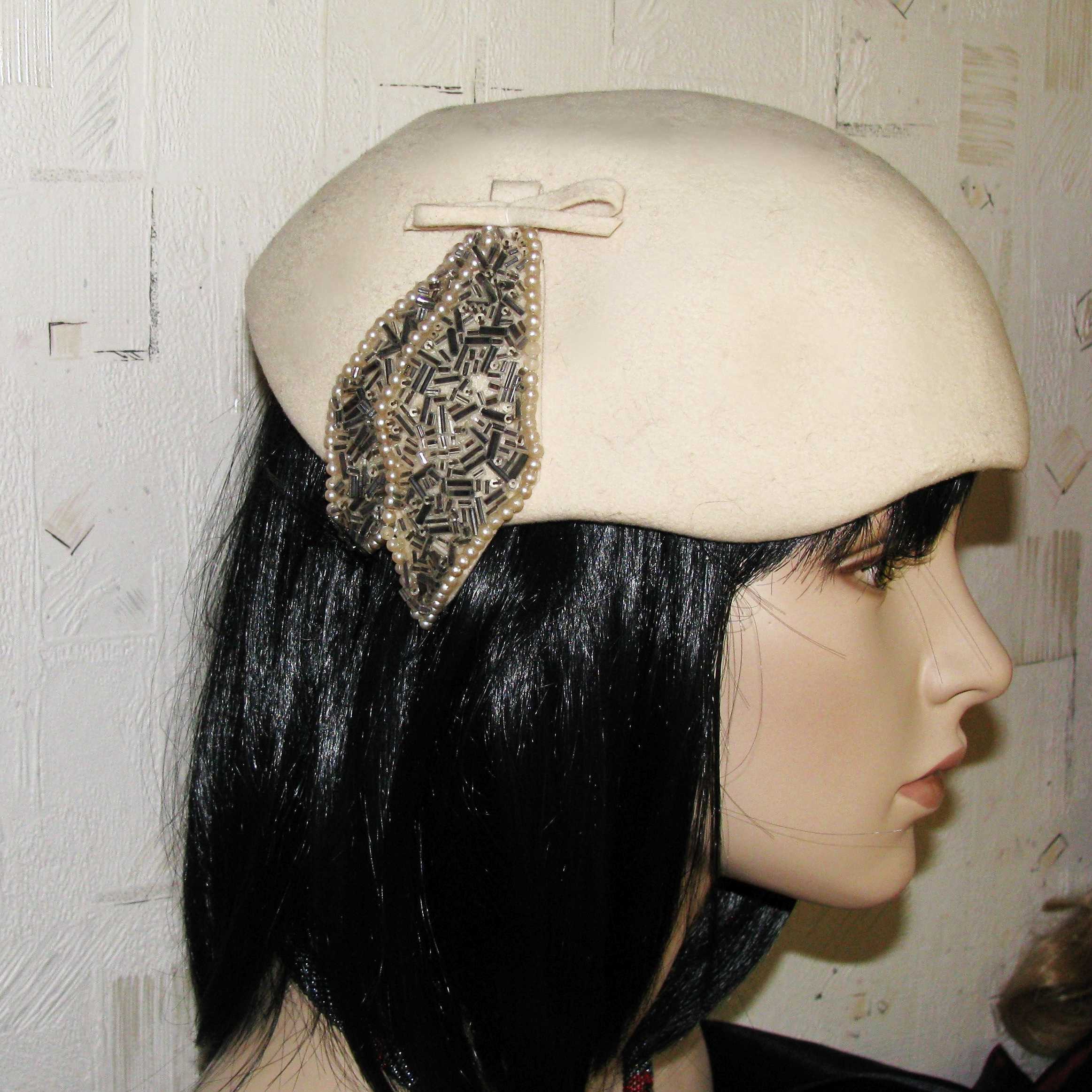
Although I only wear hats if it's raining, I love especially vintage ones. I love netting, I love sequins, I love velvet and felt.
Unfortunately my long hair doesn't go well with most of the hats I own because it keeps getting caught at the back of collars, pushes the hats up and into my eyes which doesn't work with my glasses. I would probably have to try making a chignon at the nape of my neck, but the best I manage is a wonky braid.
The bigger problem, however, is that I am a t-shirt, jeans, and sneakers woman, partly because it's the easiest outfit for me that I also feel most comfortable with, partly because cute shoes are out of the question for me, I simply can't walk in them anymore. T-shirt and jeans don't go very well with elegant vintage hats which is an absolute shame.

I got most of my hats during antiquing in the USA. My sister went on that particular trip with us and she loves vintage hats just as much as I do. We had so much fun because hats were not in abundance at the German fleamarkets or shops we went to, so this was quite new to us.
Now to the hats, though!
As you can see, I prefer mostly dark colors.


What I love most, however, are bowler or, as they are called in the USA, derby hats. Who knows, maybe it has to do with being a fan of Emma Peel and John Steed at a young age? Actually the show is called "Mit Schirm, Charme und Melone". Yes, in German we call bowlers "melons".
A bowler started it all at a huge fleamarket in the Bay Area our friend took us to. It was love at first sight.


Then I got this ladies' bowler at an antique shop in Santa Rosa. I don't remember the name of the shop, but I still know
that "Man's Favorite Sport?" was running on the small TV there. Isn't it funny which things stick in your mind?


Let's end this with the two hats I'm actually wearing.
One of them is my beloved Harris Tweed Baker Boy cap. It's one of my more colorful items, and by now I wish I had got more than just one when they still had different sizes instead of just one size with an elastic band.
Its best feature is that it fits just perfectly with all my hair stuffed inside.


The other one is a hat that has a bit of a cloche feel to it. I crocheted it myself from a few balls of "wash and felt" yarn that were on sale in a bowl in front of a shop. Felting in a washing machine was a completely new experience for me, so I felt (no pun intended ;-)) very lucky to get the size just right - you've probably guessed it, with all my hair stuffed inside.
Actually it's so perfect that I even refused stubbornly to give it to my mother when she admired it. I'm usually generous with stuff like that, but not only was I out of yarn, I was also sure that there was no chance of performing such a miracle again!


And a P.S. I forgot to add the hat that the cat on the stairs is wearing!